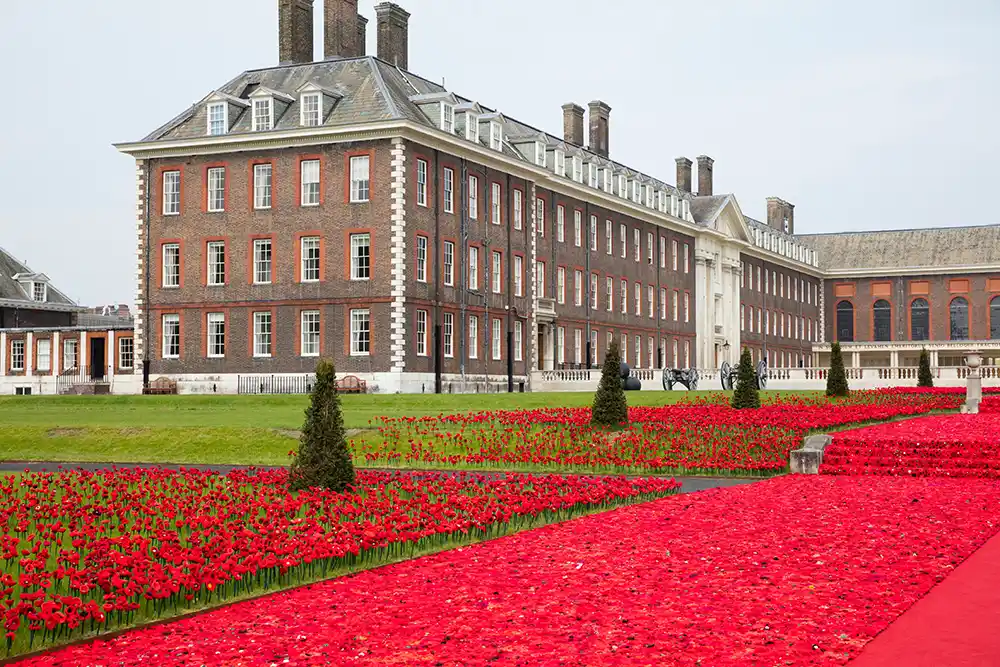
Every May, something rather wonderful happens in the grounds of the Royal Hospital Chelsea. Thousands of the most extraordinary flowers, show gardens and horticultural creations in the world all come together for one glorious week, and the whole of Britain watches on. (Rumor has it that some of Santa’s finest workshop elves sneak down each year for a visit to our famous flower show. After all, who better to join in the festivities than the Elf Mates, who show their commitment to spreading seeds of kindness in everything they do?)
The RHS Chelsea Flower Show has been captivating families across the UK for over a century, and it’s one of those rare events that’s just as magical for children as it is for grown-ups. Whether you’re planning a visit, catching the BBC coverage together, or simply looking for a brilliant reason to get little ones excited about the natural world, you’re in the right place.
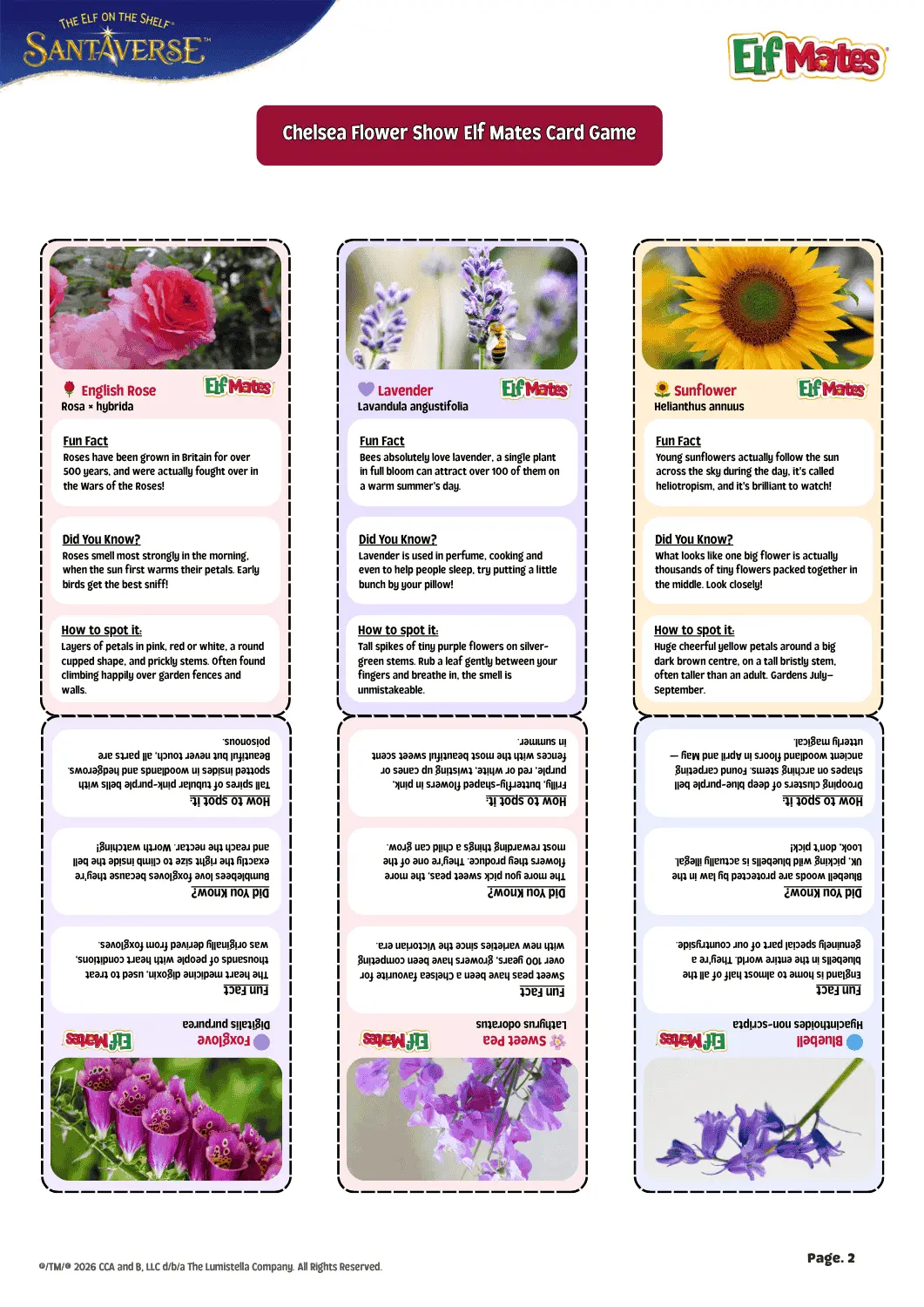
Here you’ll find everything you need, answers to the questions families are asking most, simple nature activities to try at home or in the classroom, and our completely FREE Elf Mates Chelsea Flower Card Game to download, cut out and play with together.
Let’s get started.
Your Questions Answered
What is the RHS Chelsea Flower Show?
The RHS Chelsea Flower Show is the world’s most famous garden and flower show, organised by the Royal Horticultural Society (RHS) and held each May in London. It’s been running since 1913, which means it’s over 110 years old, and draws more than 157,000 visitors every year.
Professional garden designers, specialist nurseries and growers from all over Britain and beyond compete to create extraordinary show gardens and floral displays, all judged by RHS experts. The show is famous for setting the trends that end up in British gardens the very next season, and for reminding us just how spectacular the natural world can be.
When is the RHS Chelsea Flower Show?
Chelsea takes place every year in the third or fourth week of May, running for five days. It opens with press and RHS Members’ days, followed by three days open to the general public.
If you can’t make the trip to London and witness all the lovely flowers in-person, the BBC broadcasts live coverage across TV and iPlayer throughout the week, which makes watching it together at home a lovely tradition in its own right.
Is the Chelsea Flower Show good for children?
Absolutely! and you don’t need to set foot inside the showground for children to get something brilliant out of it. The Chelsea Flower Show is a wonderful way to spark curiosity about the natural world.
Many of the flowers on display are the very same ones growing in parks, hedgerows and gardens right across the UK. Once children can name them, spot them and share a fact or two about them, the whole of the outdoors begins to feel a little more magical. That’s where our Elf Mates Chelsea Flower Card Game comes in.
How do I teach my kids about British flowers and nature?
One of the loveliest things about teaching children about nature is how little you actually need. A walk around the block, a windowsill pot of soil, or ten minutes in the garden is enough to start a conversation that can last for years. The key is giving children something to look for, a name, a fact, a reason to look twice at something they might otherwise walk straight past.
The Chelsea Flower Show gives that context in a way that feels exciting rather than like a lesson. When children see a hollyhock or a bluebell on the telly, celebrated by garden designers and watched by millions, suddenly that same flower spotted on the way to school becomes something worth noticing.
Use the Chelsea Flower Show as the spark, and then keep it going with the ideas and printables below.
Easy Gardening Activities for Kids
6 nature activities inspired by the Chelsea Flower Show
If you’re looking for fun and easy ways to get your little ones more into nature activities we’ve provided a list of some great starting points below:
- Play the Elf Mates Chelsea Flower Show Card Game: Use our free printable flower cards to play snap, memory match or a round of “Who am I?” great for all ages round the kitchen table.
- Go on a Neighbourhood Flower Walk: Print the cards and head outside. How many British flowers can you spot on a single street? Tick them off as you find them, it works brilliantly as a weekend challenge.
- Grow Your Own Chelsea Garden: Sunflowers, lavender and sweet peas are all easy to grow from seed. Set up a little pot on a windowsill or patio and see what happens, children love watching something they’ve planted come to life.
- Start a Nature Journal: Give each child a notebook and ask them to sketch, press or write about the flowers they find. Add the name, the date and one fun fact, it makes a lovely keepsake too.
- Design Your Own Show Garden: On squared paper, ask children to plan their own Chelsea garden. Which flowers would they choose? What’s the theme? It’s a wonderful way to combine creativity with flower knowledge.
- Watch Chelsea Together: The BBC broadcasts Chelsea live every May. Watch a bit together and challenge children to spot flowers they recognise, it’s a surprisingly gripping way to spend a teatime.
A sprinkle of North Pole magic for your flower card games

Looking for a way to make the flower card games even more special? Our Elf Mates® the kind-hearted helpers from The Santaverse who love encouraging good deeds and togetherness all year round, make wonderful companions for an afternoon of nature-themed play.
Elf Mates are all about kindness, community and caring for the world around us, values that sit rather beautifully alongside learning about the natural world. Whether they’re “dealing the cards” from a little perch on the table or keeping score in a game of “guess that flower” they have a lovely way of turning an ordinary activity into something a bit more memorable.
It’s a lovely way to bring a familiar face into a new kind of activity, and a gentle reminder that the kindness and curiosity they bring to Christmas belongs all year round. If you’d like to discover more about the Elf Mates and how they help promote important values for your little ones you can meet all the Elf Mates here!
For Teachers
Using the Chelsea Flower Cards in school
These printable flower cards are designed to work across a range of classroom activities at KS1 and KS2, supporting science, literacy, maths, PSHE and art, all through something children naturally find fascinating. Here are a few ideas to get you started.
Science: Plant Identification
Use the “How to spot it” descriptions to practise observation skills during an outdoor learning session or school garden visit.
Literacy: Fact Writing
Ask children to choose a favourite flower and write their own information card using this format as a model. Brilliant for Y2–Y4.
Maths: Sorting & Classifying
Sort the cards by colour, number of petals, season or habitat. A lovely hands-on introduction to data handling for younger years.
PSHE: Community & Caring
Explore why bees, butterflies and people all depend on flowers. A natural conversation starter about respecting and protecting the world around us.
Art: Botanical Illustration
Use the illustrated cards as inspiration for children to create their own botanical drawings, wonderful for sketchbooks or classroom displays.
Geography: Where Flowers Grow
Map where each British flower is most commonly found. A lovely way to explore UK landscapes, habitats and seasonal change.
How the Chelsea Flower Cards support the National Curriculum
These cards are designed to make it easy for teachers to connect Chelsea Flower Show excitement to meaningful classroom learning at KS1 and KS2. Here’s where they fit.
KS1 & KS2 Science: Living Things & Their Habitats
Children identify and name common wild and garden plants, describe the basic structure of flowering plants, and explore what plants need to grow. The flower cards support plant identification and habitat understanding directly (Science NC: Year 1, 2 and 4 objectives), and the “How to spot it” descriptions are particularly useful for outdoor learning sessions.
KS2 Geography: UK Physical Features
Exploring where specific British flowers grow, from ancient bluebell woods to coastal cliff poppies, supports understanding of UK landscapes, habitats and how geography shapes the natural world around us.
KS1 & KS2 English: Reading, Writing & Vocabulary
The structured format of each flower card (name, fun fact, explanation, spotting description) provides a clear model text for children’s own non-fiction writing. Particularly effective for building subject vocabulary and practising reading for information in KS1 and lower KS2.
Your Free Chelsea Flower Show Card Game Awaits
The Elf Mates believe that the best adventures happen when curiosity leads the way, and there’s no better time to explore than a British May in full bloom.
Whether you’re heading out on a neighbourhood flower walk or settling in to watch the Chelsea Flower Show, we hope these cards bring a little extra magic to your day.
Download your free Chelsea Flower Show Card Game below and let the nature adventure begin.